

Commercial Concrete Curbing in South Florida: A Complete Guide for Property Owners
Concrete curbing may seem like a relatively small component of a commercial property, but it plays an important role in drainage, traffic management, pedestrian safety, landscaping protection, and the overall appearance of a property.
For commercial properties in South Florida, properly designed and installed concrete curbing can be particularly important. Parking lots and exterior paved areas must withstand year-round vehicle traffic, intense sunlight, heavy rainfall, landscaping growth, and South Florida’s demanding climate.
M.A. Construction Group provides commercial concrete curbing services throughout Miami, Fort Lauderdale, Broward County, Miami-Dade County, Palm Beach County, and surrounding South Florida communities. The company’s concrete capabilities include extruded curbing, poured-in-place curbing, valley curbing, concrete paving, sidewalks, ramps, and other commercial concrete improvements.
What Is Concrete Curbing?
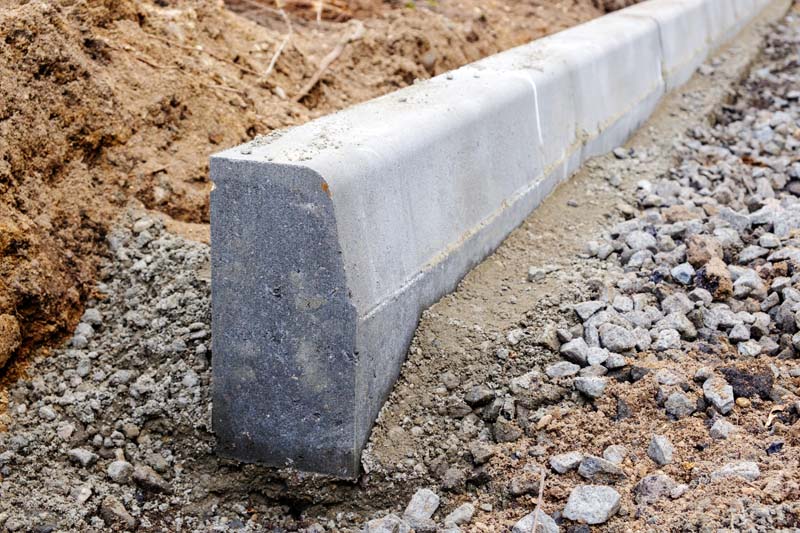
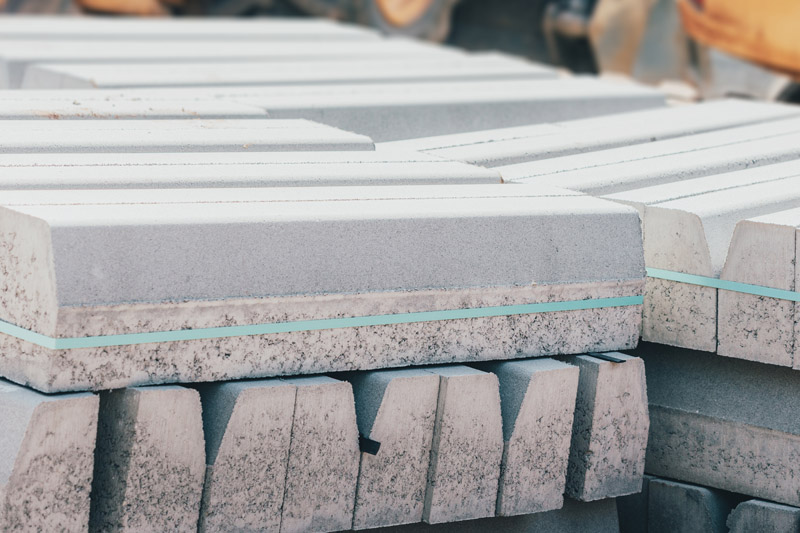
Concrete curbing is a formed concrete boundary commonly installed along parking lots, roadways, drive lanes, sidewalks, landscaped areas, and other paved surfaces.
Although curbs help create a clean and finished appearance, their purpose extends well beyond aesthetics.
Commercial concrete curbing can help:
- Define parking lots and drive lanes
- Separate vehicles from pedestrian areas
- Direct stormwater runoff
- Protect landscaping
- Establish pavement boundaries
- Reduce vehicle intrusion into restricted areas
- Protect the edges of asphalt pavement
- Create organized traffic patterns
- Reduce certain types of root intrusion into adjacent pavement
For commercial property owners and property managers, curbing is therefore both a functional and visual component of the overall property.
Why Is Concrete Curbing Important for Commercial Properties?
Commercial properties frequently experience significantly more traffic than residential properties. Shopping centers, office buildings, warehouses, industrial facilities, apartment and condominium communities, medical facilities, restaurants, and other businesses may have hundreds or even thousands of vehicle movements throughout their parking areas.
Concrete curbing establishes physical boundaries that help organize those movements.
For example, curbing can distinguish a parking area from landscaping, separate drive lanes from pedestrian areas, protect sidewalks, and help direct vehicles through a property.
Well-maintained curbs can also improve the overall appearance of a commercial property. Broken, deteriorated, or missing curbing can make an otherwise well-maintained parking lot appear neglected.
How Does Concrete Curbing Help With Drainage?
Drainage is an especially important consideration for commercial properties in South Florida.
Heavy rainfall can quickly introduce significant amounts of water onto parking lots, roadways, drive lanes, and other paved surfaces. A properly designed pavement and drainage system must move that water efficiently.
Concrete curbing can help control and direct surface runoff toward appropriate drainage infrastructure, including gutters, catch basins, and other drainage systems.
This makes curbing an important part of a larger commercial parking lot drainage strategy.
Poorly controlled water can contribute to standing water, erosion, pavement deterioration, and other property maintenance problems. For this reason, curbing, pavement grading, catch basins, and drainage infrastructure should be considered together when evaluating a commercial parking area.
What Types of Concrete Curbing Does M.A. Construction Group Install?
Different properties require different types of curbing. M.A. Construction Group provides several commercial concrete curbing options, including extruded curbing, poured-in-place curbing, and valley curbing.
Extruded Concrete Curbing
Extruded curbing is installed using specialized equipment that forms the concrete into a continuous curb profile.
It can be an efficient option for parking lots and other commercial areas requiring long, consistent sections of curbing.
Extruded curbing can help define pavement boundaries, separate landscaped areas, organize parking facilities, and create a clean transition between different areas of a commercial property.
Poured-in-Place Concrete Curbing
Poured-in-place curbing is formed and poured at the project location.
This method can be useful when a project requires specific dimensions, configurations, transitions, or integration with surrounding concrete improvements.
The appropriate design depends on the property’s existing conditions, traffic patterns, drainage requirements, and overall construction plans.
Valley Curbing
Valley curbing generally uses a lower-profile configuration designed to accommodate vehicle movement while helping manage water flow.
Depending on the property, valley curbs can be incorporated into parking lots, driveways, drainage areas, and other locations where water management and vehicle accessibility must work together.
A professional commercial concrete contractor can evaluate the site and determine which type of curbing is appropriate for the intended application.
Where Is Concrete Curbing Used on Commercial Properties?
Concrete curbing can be found throughout virtually every type of commercial property.
Common concrete curbing applications include:
- Shopping center parking lots
- Retail developments
- Office buildings
- Warehouses
- Industrial facilities
- Apartment communities
- Condominium properties
- Private roadways
- Commercial drive lanes
- Medical facilities
- Schools and institutional properties
- Municipal facilities
- Loading and service areas
- Landscaped islands
- Pedestrian areas
In many cases, curbing is installed or repaired as part of a larger parking lot improvement project involving asphalt paving, concrete paving, sidewalks, drainage, sealcoating, or striping.
Can Concrete Curbs Protect Asphalt Parking Lots?
Yes. Properly installed curbing can help protect the edges of an asphalt parking lot and create a physical separation between pavement and surrounding landscaping.
Unsupported pavement edges can be more susceptible to deterioration, particularly where vehicles repeatedly drive close to the perimeter.
Curbs create a defined boundary while also helping prevent vehicles from entering landscaped areas.
Concrete curbing can also help limit certain types of tree-root intrusion into adjacent asphalt surfaces. Root growth can contribute to pavement lifting, cracking, and uneven surfaces, making landscaping and pavement management important considerations for South Florida commercial properties.
When Should Commercial Concrete Curbing Be Repaired or Replaced?
Concrete is extremely durable, but it does not last forever.
Commercial property owners and managers should periodically inspect curbing for signs of deterioration.
Potential warning signs include:
- Significant cracking
- Broken or missing sections
- Displaced curbs
- Spalling or surface deterioration
- Vehicle impact damage
- Drainage problems
- Uneven sections
- Root-related displacement
- Deterioration where the curb meets asphalt
- Damage affecting pedestrian or vehicle areas
Minor damage may sometimes be addressed through targeted repairs, while extensive deterioration may require removal and replacement.
The appropriate solution depends on the condition of the existing concrete and the underlying cause of the damage.
Should Curbing Be Replaced When Repaving a Parking Lot?
A commercial parking lot paving or resurfacing project is an excellent opportunity to evaluate existing curbing.
Before installing new asphalt or completing major pavement improvements, property owners should inspect surrounding concrete infrastructure, including curbs, sidewalks, ramps, drainage structures, and other concrete surfaces.
Replacing badly deteriorated curbs before completing new pavement can create a more comprehensive finished project and reduce the likelihood that damaged concrete will need to be removed shortly after surrounding surfaces have been improved.
M.A. Construction Group provides both asphalt and concrete services, allowing commercial property owners to address multiple components of a parking lot improvement project through a single contractor.
Concrete Curbing and Commercial Parking Lot Improvements
Concrete curbing is often only one component of a larger commercial parking lot project.
Depending on the condition of the property, improvements may include:
Asphalt paving and resurfacing: Aging parking lots may require new asphalt, resurfacing, overlays, or localized repairs.
Concrete paving: High-use areas may benefit from durable commercial concrete surfaces.
Sidewalk installation and repair: Damaged sidewalks can affect pedestrian safety, accessibility, and property appearance.
ADA-related improvements: Commercial properties may require ramps and other accessibility-related improvements.
Drainage and catch basin work: Proper drainage helps remove stormwater from paved surfaces and protect the surrounding property.
Sealcoating and striping: Pavement maintenance and clearly marked parking areas can improve both appearance and functionality.
Taking a comprehensive approach allows property owners to address how concrete, asphalt, drainage, traffic flow, pedestrian access, and parking areas interact with one another.
Why Is Concrete Curbing Particularly Important in South Florida?
South Florida presents unique challenges for exterior commercial infrastructure.
Properties throughout Miami-Dade, Broward, and Palm Beach counties experience intense sunlight, heat, frequent rainfall, tropical storms, landscaping growth, and year-round traffic.
Parking lots and paved areas must therefore be designed and maintained with durability and water management in mind.
Concrete curbing can contribute to both objectives by creating durable boundaries and helping direct water through the property’s drainage system.
For property managers, commercial building owners, condominium associations, and businesses, proactively maintaining concrete infrastructure can also help prevent relatively small problems from developing into more extensive repairs.
Choosing a Commercial Concrete Curbing Contractor in South Florida
Commercial concrete projects require more than simply pouring concrete.
A contractor should understand how curbing interacts with pavement, sidewalks, landscaping, drainage, pedestrian areas, vehicle traffic, and the overall site.
When evaluating a commercial concrete contractor, property owners should consider factors such as:
- Experience with commercial properties
- Licensing and insurance
- Concrete and asphalt capabilities
- Knowledge of parking lot construction
- Drainage experience
- ADA and accessibility experience
- Ability to perform related property improvements
- Familiarity with South Florida construction conditions
M.A. Construction Group is a fully licensed and insured general contractor providing asphalt paving, concrete services, general construction, commercial renovations, and property repairs throughout South Florida.
Its concrete services include commercial concrete curbing, concrete paving, sidewalk installation and repair, disabled ramps, and ADA-related improvements.
Frequently Asked Questions About Commercial Concrete Curbing
What is the purpose of concrete curbing?
Concrete curbing creates a durable boundary between different areas of a property. It can help define pavement edges, direct stormwater, separate vehicle and pedestrian areas, protect landscaping, organize traffic patterns, and improve the appearance of parking lots and commercial properties.
What types of concrete curbing does M.A. Construction Group install?
M.A. Construction Group installs extruded curbing, poured-in-place curbing, and valley curbing. The appropriate option depends on the property’s design, drainage requirements, traffic patterns, and intended use.
Does M.A. Construction Group install commercial concrete curbing in Miami?
Yes. M.A. Construction Group provides commercial concrete curbing and other concrete services in Miami, Miami-Dade County, Fort Lauderdale, Broward County, Palm Beach County, and throughout South Florida.
Can concrete curbing help with parking lot drainage?
Yes. Concrete curbs can help direct surface water toward gutters, catch basins, and other drainage infrastructure when incorporated into a properly designed drainage system.
Can damaged concrete curbing be repaired?
In many cases, yes. The appropriate repair depends on the extent and cause of the damage. Severely cracked, displaced, deteriorated, or broken sections may require removal and replacement.
Does concrete curbing help protect landscaping?
Yes. Curbs create a physical boundary between parking or driving areas and landscaped sections of a property, helping prevent vehicles from entering or damaging landscaped areas.
Can concrete curbing help protect an asphalt parking lot?
Concrete curbing can help define and support pavement boundaries while separating asphalt surfaces from landscaping. It can also help limit certain forms of root intrusion and vehicle-related edge damage.
Should curbs be inspected before resurfacing a parking lot?
Yes. Property owners should evaluate curbs, sidewalks, drainage structures, ramps, and other concrete infrastructure when planning a major parking lot resurfacing or paving project. Addressing damaged concrete at the same time can result in a more complete property improvement.
Does M.A. Construction Group provide services beyond concrete curbing?
Yes. M.A. Construction Group provides commercial concrete paving, sidewalk installation and repair, ADA-related improvements, asphalt paving, resurfacing, patching, sealcoating, striping, parking lot maintenance, drainage and catch basin work, commercial renovations, tenant improvements, and general commercial property repairs.
Commercial Concrete Curbing Services in Miami, Fort Lauderdale and South Florida
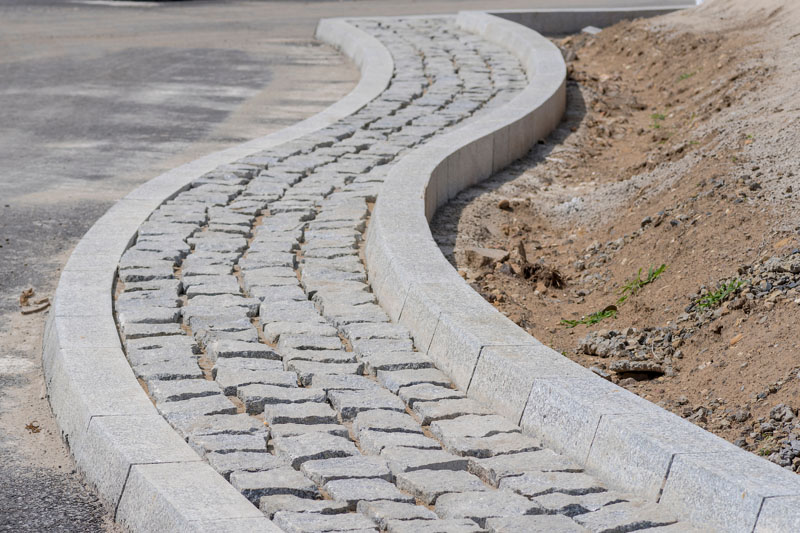
From parking lot boundaries and landscaped islands to drainage areas and commercial drive lanes, concrete curbing is an important part of a safe, organized, and professionally maintained commercial property.
M.A. Construction Group provides commercial concrete curbing and related concrete construction services throughout Miami-Dade, Broward, Palm Beach, Fort Lauderdale, Miami, and South Florida.
Whether a property requires new curbing, replacement of deteriorated sections, parking lot improvements, concrete paving, sidewalk repairs, drainage improvements, or a larger commercial construction project, working with an experienced commercial contractor can help ensure that each component of the property functions as part of a complete system.
For commercial property owners, property managers, businesses, condominium associations, and real estate professionals considering a concrete curbing project, visit M.A. Construction Group to request an estimate and learn more about its commercial concrete services.
Request a Concrete Curbing Project Estimate
We would love the opportunity to speak with you about your next Concrete Curbing Project. Contact us today for more information and/or to request a project estimate.
Comments are closed