

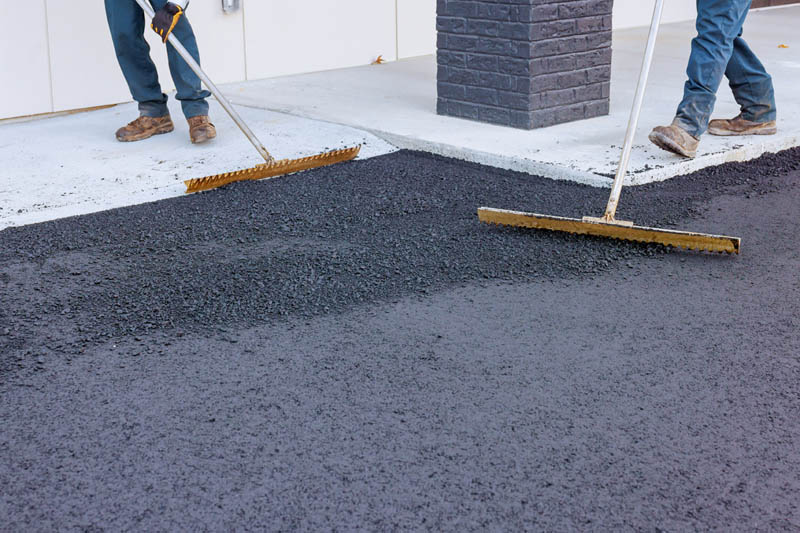
Commercial Asphalt Paving in South Florida: Understanding Pavement Construction, Failure, and Repairs
Commercial asphalt paving is essential to the functionality, safety, and appearance of shopping centers, office buildings, warehouses, industrial facilities, and commercial properties throughout South Florida.
However, the performance of an asphalt parking lot depends on much more than the appearance of its finished surface. Proper foundation preparation, material selection, drainage, installation techniques, and repair methods all contribute to pavement longevity.
For property owners and managers throughout Miami-Dade, Broward, and Palm Beach counties, understanding how asphalt pavement works can help prevent premature deterioration and costly repairs.
M.A. Construction Group is a licensed and insured commercial construction contractor with more than 40 years of industry experience. The company provides asphalt paving, patching, resurfacing, and related parking lot improvement services throughout South Florida.
The following questions explore the technical aspects of commercial asphalt pavement and explain how they apply to real-world property maintenance and construction decisions.
1. What is commercial asphalt pavement made of, and why does its composition matter?
Commercial asphalt pavement is typically constructed using asphaltic concrete, a mixture of coarse aggregates, fine aggregates, and asphalt binder.
The coarse aggregates provide much of the pavement’s structural framework, while smaller aggregates help fill spaces within the mixture. Asphalt binder, produced through petroleum refining, holds the materials together.
When properly designed and installed, this combination creates a flexible pavement surface capable of supporting vehicle traffic.
However, asphalt mixtures must be selected according to anticipated traffic loads, environmental conditions, and project specifications.
For commercial properties in Miami, Fort Lauderdale, Boca Raton, and West Palm Beach, selecting appropriate materials is an important part of building pavement that can withstand frequent use and South Florida’s demanding climate.
2. Why is the foundation underneath an asphalt parking lot so important?
The foundation underneath asphalt pavement is responsible for supporting and distributing vehicle loads.
Commercial asphalt pavement generally consists of multiple layers, including prepared subgrade, compacted aggregate base, and an asphalt surface course.
Depending on engineering specifications, a pavement design may include granular subgrade material, crushed aggregate, and one or more asphalt layers.
Each layer performs a different function.
The subgrade provides foundational support, the aggregate base helps distribute loads, and the asphalt surface creates the finished driving area.
When underlying materials are inadequately prepared or become unstable, pavement may develop cracking, rutting, depressions, and other failures.
For commercial properties throughout Miami-Dade, Broward, and Palm Beach counties, foundation evaluation should be an important part of new asphalt construction and major pavement rehabilitation projects.

3. What causes commercial asphalt parking lots to crack, rut, or deteriorate?
Asphalt deterioration typically results from a combination of environmental conditions, traffic loads, and underlying pavement deficiencies.
Common causes include water infiltration, tree root intrusion, repeated vehicle loading, sunlight exposure, oxidation, and petroleum spills.
Heavy vehicles may contribute to rutting or depressions, particularly when pavement materials or the underlying foundation cannot adequately support the loads.
Tree roots can displace pavement and create uneven surfaces.
Water entering through cracks can weaken underlying materials and accelerate pavement failure.
South Florida’s frequent rainfall, intense sunlight, and year-round commercial activity make these factors especially relevant to local property owners.
Identifying the cause of deterioration is essential because repairing visible surface damage without addressing underlying conditions may lead to recurring problems.
4. Why do cracks sometimes return after an asphalt parking lot has been resurfaced?
Cracks that reappear through a newer asphalt surface may be caused by reflective cracking.
Reflective cracking occurs when existing cracks, joints, or movement in underlying pavement influence the newly installed surface.
Although resurfacing can restore pavement appearance and improve functionality, it does not automatically eliminate existing structural movement.
Certain pavement rehabilitation projects may incorporate geotextile paving fabrics to help manage crack propagation.
However, these materials are not appropriate for every pavement condition.
Before resurfacing a commercial parking lot, the existing pavement should be evaluated to determine whether cracks require additional treatment or whether damaged sections should be removed and replaced.
5. When should a commercial parking lot be patched instead of resurfaced?
The appropriate repair method depends on the extent and severity of pavement deterioration.
Asphalt patching is generally used to address localized damage. The affected section may be sawcut, removed, and replaced with new asphalt.
Asphalt overlays involve installing a new asphalt layer over an existing pavement structure that remains suitable for rehabilitation.
Milling and resurfacing involve removing a portion of the existing pavement surface before installing new asphalt.
For commercial properties with isolated potholes or localized failures, patching may be appropriate.
When deterioration affects larger pavement areas, resurfacing may offer a more comprehensive solution.
However, widespread structural failures may require deeper repairs or reconstruction.
M.A. Construction Group provides asphalt patching, resurfacing, and parking lot repair services throughout South Florida.
6. Why does standing water often indicate a larger asphalt pavement problem?
Standing water may indicate improper grading, drainage deficiencies, pavement depressions, or deterioration within the underlying pavement structure.
When water accumulates and penetrates damaged asphalt, it can weaken base materials and contribute to further deterioration.
Repeated vehicle traffic over weakened pavement can accelerate cracking, pothole formation, and surface deformation.
For commercial properties in Miami-Dade, Broward, and Palm Beach counties, rainfall makes proper drainage especially important.
Recurring pavement failures near areas of standing water should be evaluated to determine whether drainage improvements are needed alongside asphalt repairs.
7. How can commercial property owners determine whether their asphalt pavement needs replacement?
A professional pavement evaluation should consider several factors, including the extent of cracking, pavement deformation, drainage performance, underlying foundation conditions, and anticipated traffic loads.
Localized failures may be addressed through targeted repairs.
Widespread surface deterioration may be suitable for resurfacing if the underlying structure remains stable.
However, significant base failures, severe deformation, or recurring structural damage may require more extensive reconstruction.
The objective is to select a repair method that addresses the cause of deterioration while supporting long-term pavement performance.

Commercial Asphalt Paving in Miami-Dade, Broward, and Palm Beach Counties
M.A. Construction Group provides commercial asphalt paving, asphalt repairs, resurfacing, and related pavement improvement services throughout South Florida.
The company serves commercial property owners, shopping centers, industrial facilities, office complexes, warehouses, condominium associations, and property managers.
Whether your property is located in Miami, Doral, Hialeah, Fort Lauderdale, Hollywood, Pompano Beach, Boca Raton, or West Palm Beach, understanding the condition of your asphalt pavement is an important first step toward effective maintenance and rehabilitation.
With more than 40 years of construction industry experience, M.A. Construction Group helps commercial property owners evaluate pavement conditions and identify appropriate construction and repair solutions.
Request a free project estimate from M.A. Construction Group.
Website: https://maconstructiongroup.com/
Miami-Dade: (786) 475-6411
Broward & Palm Beach: (954) 295-0535
Continue the series: Learn about commercial concrete pavement construction in Part 2 and preventative parking lot maintenance in Part 3.
Comments are closed